


Replacing Your Claims Communications Platform: What Insurers Need to Know Before They Start
Articles

2026-09-23

Insurance companies rely on complex forms and documents to manage policies, claims, underwriting, and compliance. Unfortunately, many organizations still operate with outdated, inefficient processes that create bottlenecks, delays, and expensive errors. The lack of collaboration across departments—especially between product management, IT, and compliance—leads to missed opportunities, regulatory risks, and unnecessary expenses. Let’s examine key points from this report by industry analyst Celent discussing the true cost of poor collaboration in the forms and document lifecycle.
The forms and document lifecycle directly impacts an insurance company’s bottom line. When collaboration gaps exist, costs add up in several ways:
When teams lack streamlined communication with each other, new or updated forms take longer to reach the market. Delays in launching new products or responding to regulatory changes can lead to lost competitive advantage, customer dissatisfaction, and missed revenue potential.
Failure to maintain up-to-date forms and comply with regulatory changes can result in non-compliance fines. Without a structured collaboration process, teams struggle to keep track of necessary updates, putting the organization at legal and financial risk.
Manual workflows, duplicated efforts, and version control issues lead to significant operational costs. Employees spend unnecessary time searching for the latest form versions, correcting errors, and redoing work, ultimately decreasing productivity and increasing expenses.
When outdated or incorrect forms are used in customer communications, the result is confusion, frustration, and potential reputational damage. Customers expect seamless, professional interactions with their insurance providers, and inefficiencies in document management can lead to lost trust and even lost customers.
To remain competitive in an ever-evolving market, insurers must prioritize efficiency, collaboration, and compliance. Celent’s research shows that by addressing gaps in the forms development process, companies can:
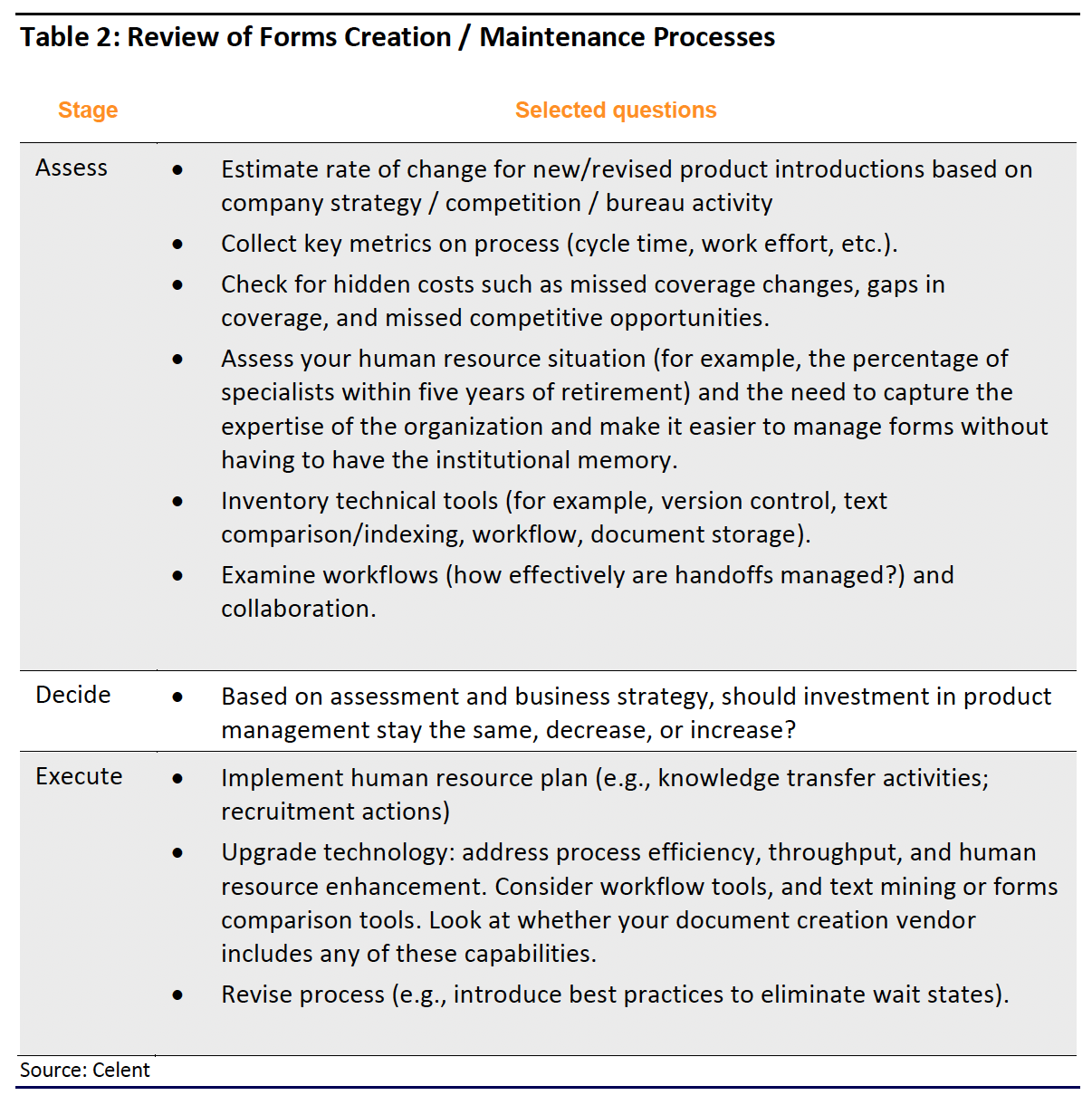
In order to effectively examine your document lifecycle process and make sure you are operating at maximum efficiency with a modern approach to customer communication management, Celent suggests insurers take these three steps:
GhostDraft offers a powerful suite of solutions that help insurers close the collaboration gap and optimize their forms lifecycle. Our platform includes:
By leveraging GhostDraft’s technology, insurers can significantly reduce inefficiencies, lower costs, and improve their overall document management strategy.
The financial impact of poor collaboration in the forms lifecycle is significant, affecting revenue, compliance, operational costs, and customer satisfaction. (For an in-depth review of this topic, read the entire Celent reportfor free.) However, by assessing current inefficiencies, implementing a structured optimization plan, and investing in the right technology, insurers can transform their processes for greater agility and efficiency. GhostDraft provides the tools insurers need to streamline their document workflows, ensure compliance, and enhance collaboration across departments. With automation, real-time collaboration, and centralized document management, insurers can achieve faster speed to market, reduced costs, and a superior customer experience.

Get industry insights and customer stories delivered to your inbox.
Discover how GhostDraft can help you create better experiences, greater efficiency and more agility across any platform.

Want to switch to the South Africa site for local features?
Want to switch to the United States site for local features?